
Ask most people when tick season is and they will say summer. In Rhode Island, that answer is incomplete. The young ticks responsible for most Lyme disease cases peak in late spring and early summer, but adult blacklegged ticks come out in force in the fall, and they stay active on any winter day warm enough to rise above freezing. A November walk through the leaves at Arcadia Management Area or a December afternoon clearing brush in the backyard can still end with a tick.
A high-incidence state
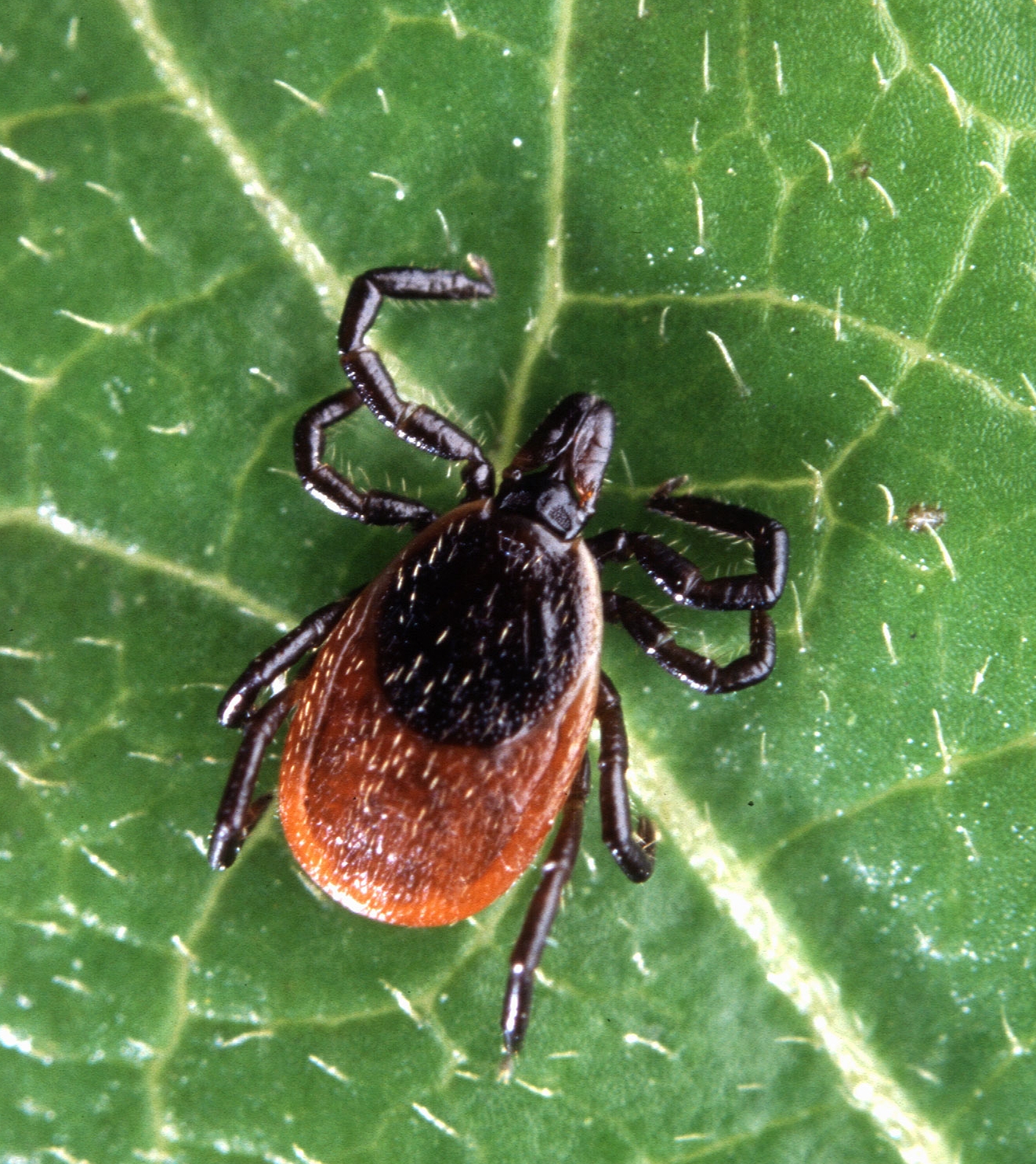
The Centers for Disease Control and Prevention1 lists Rhode Island among the states where Lyme disease is most common, alongside much of the Northeast and upper Midwest. The bacteria that cause it are spread in this region by the blacklegged tick, often called the deer tick.
Lyme is not the only concern. The same tick can carry the organisms that cause anaplasmosis and babesiosis, a parasite that infects red blood cells and has a long history in southern New England, including on Block Island. Less commonly, it can transmit Powassan virus. Lone star ticks, once rare here, have been reported more often in recent years.
The TickEncounter Resource Center3 at the University of Rhode Island tracks tick activity and has made Rhode Island something of a hub for tick research and public education. Its tick identification tools are useful if you find one and are not sure what it is.
A November walk through the leaves can still end with a tick.
How transmission works
Timing matters. According to the CDC, in most cases a blacklegged tick has to be attached for 36 to 48 hours or more before it transmits the Lyme bacteria. That is the reason daily tick checks are so effective. A tick found and removed the same day is much less likely to cause an infection.
The difficulty is that nymphs, the stage responsible for most infections, are about the size of a poppy seed, and their bites are usually painless. Many people with Lyme disease never remember being bitten.
Prevention that works
The CDC's prevention guidance2 comes down to a few habits.
Know where ticks live. They wait in leaf litter, tall grass, brush and the edges between lawns and woods. Staying in the center of trails helps.
Use an EPA-registered repellent on exposed skin. Options include DEET, picaridin, IR3535 and oil of lemon eucalyptus.
Treat clothing and gear with permethrin, or buy pre-treated clothing. Permethrin is for fabric, not skin.
Shower soon after coming indoors, ideally within two hours, which can wash off unattached ticks and is a good moment for a full body check.
Check carefully, including the scalp, behind the ears, under the arms, inside the belly button, behind the knees, between the legs and around the waist. Check children and pets too.
Put dry clothes in the dryer on high heat for 10 minutes to kill ticks that hitched a ride.
If you find one
Remove it promptly with fine-tipped tweezers, grasping as close to the skin as possible and pulling upward with steady pressure. Do not twist, burn or smother it. Clean the area afterward.
Note the date and, if you can, save the tick in a sealed bag or photograph it. In some situations, particularly when a blacklegged tick has been attached for 36 hours or more in a high-incidence area like Rhode Island, clinicians may offer a single preventive dose of an antibiotic if it can be started within 72 hours of removal. Call your clinician to ask whether that applies to you.
Symptoms to watch for
Over the following three to 30 days, watch for an expanding red rash, sometimes but not always with a bull's-eye appearance, along with fever, chills, fatigue, headache or muscle and joint aches. Later symptoms can include facial drooping, heart palpitations, severe headaches or arthritis with joint swelling, especially in the knees.
Babesiosis and anaplasmosis often cause fever, chills and fatigue without a rash. Babesiosis can be severe in older adults, people without a spleen and people with weakened immune systems.
If any of these symptoms appear after time outdoors, see a clinician. Early treatment is straightforward and effective for most tick-borne illnesses.
Local resources
The Rhode Island Department of Health4 publishes information on tick-borne diseases and reportable illness data. TickEncounter offers identification help and seasonal activity alerts.
If you find an attached tick, note the date and, if you can, save it in a sealed bag or photograph it. Should a rash or fever show up in the following weeks, that detail helps a clinician decide quickly whether to treat. For bites from a blacklegged tick that was attached 36 hours or more, a single dose of doxycycline within 72 hours of removal is an option in areas like Rhode Island where Lyme is common, and it is worth a phone call to ask.


